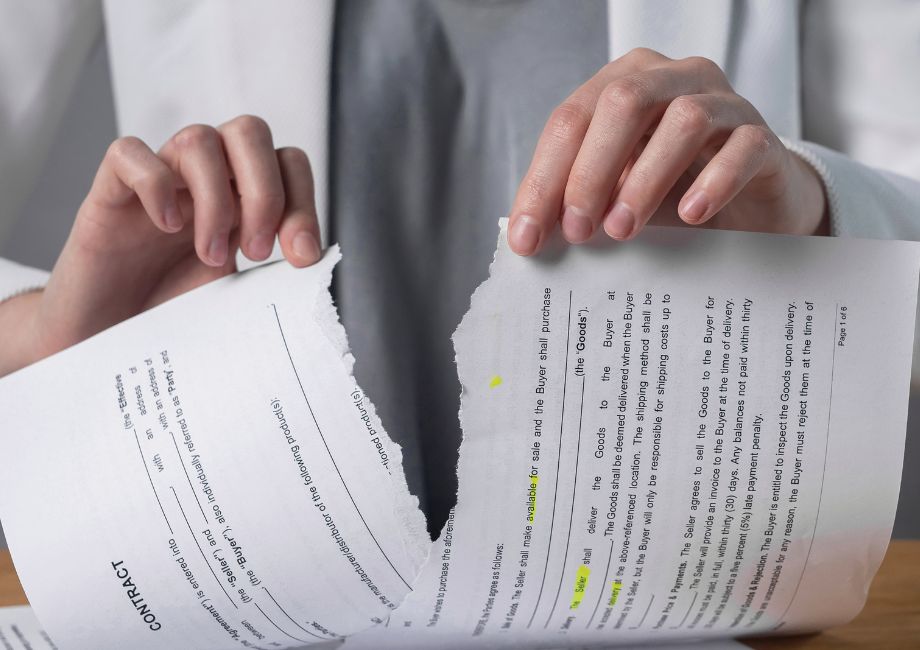
A breach of contract can put your business, your money or your livelihood at risk. Knowing your rights, and acting in the right order, makes all the difference to the outcome.
Contracts are the backbone of everyday business and personal life, from a supplier agreement to an employment contract to a building project. When one party does not do what they promised, the consequences can be serious. This guide explains what a breach of contract is, the options open to you, the remedies available, and the practical steps that protect your position.
What is a breach of contract?
A breach of contract happens when one party fails to meet its obligations under a legally binding agreement without a lawful excuse. That might mean not paying, not delivering, delivering late, or providing something that does not meet the agreed standard.
Breaches generally fall into a few types:
- Minor, or partial, breach: a relatively small failure that does not undermine the whole contract
- Material breach: a significant failure that defeats the purpose of the contract and may allow the other party to end it
- Anticipatory breach: where one party makes clear, before performance is due, that they will not perform
A contract does not have to be a formal written document. Verbal agreements can be binding too, though they are far harder to prove.
How do you know if a contract has been breached?
To establish a breach, you generally need to show:
- A valid contract existed
- You performed your side, or were ready to
- The other party failed to perform their obligations
- You suffered a loss as a result
If those elements are present, you are likely dealing with a breach and entitled to consider your options.
What are your options?
It is rarely sensible to jump straight to court. The usual order is:
- Negotiation first: a clear letter setting out the breach and what you want often resolves matters
- Mediation or other dispute resolution: a neutral third party can help reach a settlement without litigation
- A formal legal claim: where resolution fails, a claim through the County Court or, for larger or more complex matters, the High Court
Courts now expect parties to attempt to resolve disputes before litigating. For money claims under £10,000, mediation through the Small Claims Mediation Service has been a compulsory step since May 2024, and the courts have confirmed they can require parties to engage in dispute resolution more generally. Ignoring this can affect the costs you recover even if you win. GOV.UK explains how to make a court claim for money if matters reach that stage.
What remedies are available?
The most common remedy is damages: a payment of money to put you, so far as money can, in the position you would have been in had the contract been performed. Damages are compensatory, not a punishment, so you need to be able to show your actual loss.
Other remedies include:
- Specific performance: a court order requiring the other party to do what they promised, used where damages are not adequate
- Injunctions: an order stopping a party from doing something
- Rescission: unwinding the contract and returning both parties to their original positions
Breach of employment contract
Employment contracts have their own dimension. A breach can come from either side: an employer might breach by failing to pay agreed wages or unilaterally changing terms, while an employee might breach restrictive covenants or notice provisions.
Where an employer’s breach is serious enough that the employee feels forced to resign, this can give rise to a constructive dismissal claim. Employment disputes can run through the employment tribunal or the civil courts depending on the nature of the claim, and the costs and procedures differ. Our guide to employment tribunal costs explains what to expect on the tribunal route, and Acas offers free early conciliation before most tribunal claims.
How long do you have to make a claim?
Time limits matter. Under the Limitation Act 1980, you generally have six years from the date of the breach to bring a claim for breach of a simple contract, and twelve years where the contract was made as a deed. Employment tribunal claims have much shorter limits, often just three months.
Acting promptly is not only about the deadline. Evidence is fresher, witnesses are easier to find, and early action often leads to a better settlement.
How much does it cost to pursue a claim?
Cost depends on the complexity and value of the dispute and how far it goes. Many disputes settle well before trial, which keeps costs down. Some claims can be funded on a no win, no fee basis, depending on the circumstances. The most cost-effective step is almost always to take advice early, because early advice is far cheaper than unwinding a problem that has been allowed to escalate.
How to protect yourself
Whether you are facing a breach or want to avoid one, a few principles consistently protect your position:
- Keep everything in writing: document communications from the moment a dispute arises
- Do not destroy or alter records: preserving evidence is critical
- Read your contract before escalating: check for dispute resolution or mediation clauses
- Work out your actual loss: damages are compensatory, so know your numbers
- Try to resolve it before court: courts expect parties to have attempted resolution
- Act before the limitation period expires: usually six years for contract claims
- Take legal advice early: it is cheaper and more effective than late advice
- Weigh up the relationship: litigation can end a commercial relationship, so know when to settle
When to speak to a solicitor
Not every dispute needs a solicitor, but legal advice is worthwhile where the sums are significant, the other side has instructed lawyers, the contract terms are unclear, or the dispute affects your business or employment. A contract and business dispute solicitor can assess the strength of your position, set out realistic options and costs, and handle the correspondence and any claim on your behalf.
For disputes involving property or construction, our building disputes team can help. For disputes between business owners, see our director and shareholder disputes page.
Resolving a contract dispute early usually saves time, money and stress. If you are dealing with a breach of contract, the sooner you take advice, the more options you are likely to have.
To speak to a member of our disputes team, please call us on 01253 362 500.
Disclaimer: The content of this blog is for general awareness and insight. It is not legal or professional advice and readers should not act upon the information provided. You should seek professional advice based on your own particular circumstances. The law may have changed since this article was published.
FAQs
What counts as a breach of contract in the UK?
A breach happens when one party fails to meet its obligations under a binding contract without a lawful excuse, such as not paying, not delivering, or not meeting the agreed standard.
Can I sue for breach of contract without a written contract?
Yes. Verbal contracts can be legally binding, but they are harder to prove, so evidence of the agreement and what was promised becomes especially important.
How long do I have to claim for breach of contract?
Generally six years from the date of the breach for a simple contract, or twelve years if the contract was made as a deed.
What is the difference between a minor and a material breach?
A minor breach is a small failure that does not undermine the contract. A material breach is serious enough to defeat its purpose and may allow the other party to end the contract.
Do I need a solicitor to make a breach of contract claim?
Not always, particularly for small claims. For higher-value or complex disputes, legal advice usually improves both the outcome and the chances of an early settlement.
Is mediation required before going to court?
For money claims under £10,000, mediation is now a compulsory step. More generally, courts expect parties to have tried to resolve a dispute, and failing to do so can affect costs.